
The 30-Minute Ask.
The heart of AGORA's fundraising training, cut to one skill: build and deliver the 30-minute presentation — the problem, the solution, your part in it, and a compelling ask. Part 1 is the core hour. Part 2 goes deeper on the ask itself when you're ready.
How to work through this
Part 1 is the core hour — watch the two lessons in order and you have the whole skill: the anatomy of the 30-minute donor presentation, then the real presentation delivered start to finish. Part 2 goes deeper on the ask itself when you're ready. Everything taught is also written out under each lesson, so you can review without replaying.
Part 1 The 30-Minute Presentation 3 lessons
The core hour. Why the 30-minute meeting is the goal of everything else you do, the ground rules that make it work, and Jason's actual donor presentation walked through element by element — friend building, the split story, the credibility middle, and the close.
1.1 Required Reading 2 books
Two books, and for AGORA staff they are not optional. Read them alongside the lessons — Nouwen first, because he settles the question of whether you should be asking at all, then Shadrach, because he shows you how. Everyone else working through this training: highly recommended. Buy your own copy and mark it up.
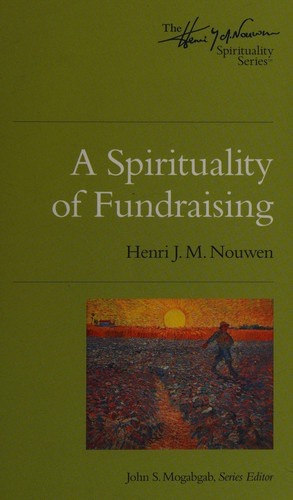
Nouwen's argument in one line: fundraising is ministry, not begging. You are not taking money from people — you are inviting them into a mission God is already doing. Read this first. It kills the shame before it starts.
Buy it on Amazon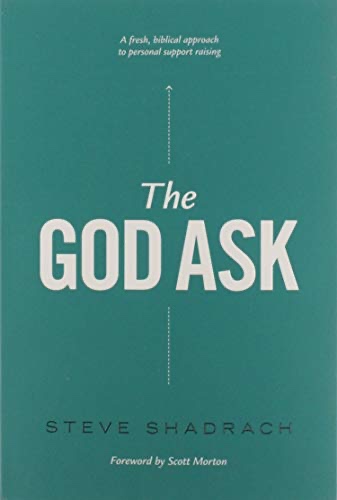
The manual. Where the money comes from, how to build a list, what to say on the phone, how to follow through. Much of what you hear in these lessons lines up with Shadrach — this is the long version you can go back to.
Buy it on AmazonFundraising is ministry, not begging — settle that before you build a single slide.
Before you watch a minute of footage, get these two books and start reading. Nouwen is 64 pages and reads in one sitting; Shadrach is the long manual you will keep going back to. Everything in the lessons that follow assumes you are settled on WHY you get to ask — that is Nouwen's job — and the mechanics you hear here line up with Shadrach's. Mark this lesson complete once you have both books in hand and have started Nouwen.
- Required for AGORA staff. Highly recommended for anyone else working through this training.
- Read Nouwen first — 64 pages, one sitting. It kills the shame before it starts.
- Shadrach is the reference manual: lists, phone calls, follow-through. Keep it on the shelf.
- Buy your own copies. Mark them up. You will come back to them mid-campaign.
1.2 Anatomy of the 30-Minute Presentation 25 min
The 30-minute meeting has to earn an investment, not sympathy — and hiding details only creates doubt.
If you pay, you have a higher chance of having them invest in your ministry. I'm telling you, it's a reality.
Me saying I love people and there's a lot of people in need does not translate into someone wanting to invest in you.
If you try to hide everything, it gives the enemy room for questions in people's mind.
Jason breaks down the real goal and format of the 30-minute meeting — it's where someone actually hears your full vision and heart, always in person (or Zoom), always with you paying for the meal — and starts walking through his own live presentation slide by slide as the model.
- The 30-minute meeting is the actual goal of the entire process — the 90-second and 5-minute conversations only exist to earn this meeting.
- Always meet in person (or Zoom) for the real presentation — never over the phone, never by letter.
- You pay for the meal. If they pay, you got a free lunch; if you pay, you're building a donor.
- A full presentation covers: the ministry's strategy, staff, board, budget, and then the personal call — in that order, building credibility before making it personal.
1.3 Jason's Full Presentation, Walked Through 30 min
One specific story, told from the heart, carries the whole case for investing — statistics never will.
I am literally doing the best thing I could have ever done in my life, and I find that this is the single most joyous thing I've ever done.
In the middle of the hospital, going through chemotherapy, I told him, well, then I don't want a part of my life anymore because I want my daughter to know who Jesus is.
They need the hope of the gospel. They need to know about the love of Jesus. And this is why we exist.
Jason continues walking through his actual donor presentation live — program impact numbers, the real story behind AGORA's growth, and a transparent budget breakdown (57% staff support, facilities, direct ministry costs) — modeling exactly what a strong, credible 30-minute ask looks like from a leader.
- Show real numbers: reach vs. depth (e.g., 2,000+ kids reached annually vs. about 35 in deep discipleship relationship) tells a more honest and more compelling story than one big stat alone.
- Share a transparent budget breakdown (staff support, facilities, direct ministry costs) — donors want to know their money is being stewarded well.
- Close with your personal call story, delivered from memory, not read off the slide — it should feel like a real conversation, not a script.
- A full presentation Jason can deliver in about 20 minutes when he isn't stopping to explain each part to trainees — practice compresses and sharpens it.
Part 2 Go Deeper — The Ask Itself 2 lessons
Optional second sitting. The four-part spine under every compelling ask (problem → solution → your part → the ask), why less is more, why it's always monthly — and the six steps that take an ask from research to commitment.
2.1 The Art of the Ask: Developing & Practicing Your Presentation 13 min
Cut your ask down to one clear sentence, tell true stories that connect hearts, and always ask for monthly, not one-time, giving.
Stories communicate with the heart. When you tell a story, it changes how people perceive what you do.
None of us get a paycheck from Agora. Everyone on staff, all the way up to the director, we all raise our own support as missionaries.
The only way you can have a real budget is monthly donors.
You must actually ask — clearly, not by hint — and the strongest asks are short (“less is more”) and built around real stories, not statistics. Jason walks through the four-part presentation structure (the problem, the solution, your personal part, then the ask) and sets the practice bar: 10–20 full run-through practice asks depending on how comfortable a communicator you are.
- You must literally ask — donors don't respond to hints.
- “Less is more” — the ask itself should be one clear sentence, not a rambling paragraph.
- Presentation structure: the problem → the solution → your personal part in it → the direct ask to join your monthly financial support team.
- Stories connect with the heart; statistics alone don't move people to give.
- Practice 10 times (strong communicators), 15 (average), or 20 (if you tend to lose your place) — full run-throughs, not shortcuts.
- Always ask for monthly support, not a one-time gift — that's what makes a sustainable budget possible.
2.2 The Six Steps of the Ask 19 min
Never decide for someone whether they can afford to give — that judgment is not yours to make.
If you look at somebody and say they don't have money to give, I'm not going to ask them — you're being a judge of God's people, and it is not your place.
Jesus said, look at this woman. She gave more than everyone else. She gave out of what she did not have. Everyone else gave out of what they had.
We've got a $25 donor to Agora. She's only been able to do $25 a month, but she's done it every month for like 15 years.
Jason walks the complete ask start to finish: research your donor and what moves them, believe you're meant to be funded, share the story and the solution, welcome objections as buying signals, actually ask for the commitment, and arrange a concrete next step. He closes with a hard word on never deciding for someone whether they can afford to give — including the widow's mite and stories of $15 and $25 monthly donors who have given faithfully for years.
- Step 1 — Research: learn what actually moves this person (kids, education, the gospel, youth) and lead with that. Grant funders publish this outright.
- Step 2 — Believe you're meant to be funded. If you're not convinced it's God's will, you won't be convincing when you ask.
- Step 3 — Share the story AND the solution. The problem alone is discouraging; the solution is what people invest in.
- Step 4 — Handle objections as good news. In sales, a person who doesn't care asks no questions — questions mean they're engaging.
- Step 5 — Actually ask for the commitment. Skip the closing sentence and you didn't do a presentation.
- Step 6 — Arrange the next step before you leave, then follow up on exactly the day you said you would.
- Never ask for less than $100/month — or name no amount at all. But never pre-judge who can give: Jason cites the widow's mite, a $15/month donor who kept giving through job loss, and a $25/month donor faithful for 15+ years.